Teen numbers
In this activity students learn that the code in English for numbers from 13 to 19 the "teen" part of the words means ten.
realise that the meaning of words like sixteen can be decoded by inspection of the word; the six means six and the “teen” means ten.
Large numbers of students fail to realise that “x-teen” in English means “x” ones and one ten. This is a serious impediment to them learning clever mental strategising.
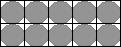
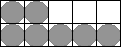
- Ask students to place 10 counters on a frame and 7 on another frame.
-
Ask how many counters altogether. Watch for the students who count 10, 11, 12, 13, 14, 15, 16, 17. Such students do not understand that the seven in seventeen means seven ones and a ten.
-
Tell the students the code for “- teen”. It simply a crazy way to spell means ten. Invite them to show explain how they would put out 14, 17 ,19 and 18 on tens frames.
-
Then address the language issues of the unreliable x-teen coded numbers - fifteen meaning fiveteen, thirteen meaning threeteen.
-
Address the language issues of the super - unreliable teen words in English. They are twelve which should be twoteen, and eleven which should be oneteen.
Similar Resources
Building Teens
In this activity the students use their knowledge of tens frames to reinforce their knowledge of teen numbers. The activity encourages the students to notice the different combinations they are able to make.
Facts to 10
Count a set of objects in the range 1–10.
Instantly recognise patterns to 10, including finger and tens frame patterns.
Instantly recognise patterns to 10 including doubles.
Recall the facts up to 10, and the teen facts.
Using Tens Frames for "Teen" Numbers
The purpose of this unit is to recognise and understand teen numbers. This is an essential piece of knowledge for the part-whole strategy of bridging to ten.
Squeeze - Guess my Number
Order numbers in the range 0–100.
Order the numbers in the range 0–1000.
Order whole numbers in the range 0–1 000 000.
Read decimals with tenths, count forwards and backwards in tenths, order decimals with tenths.
Identify and order decimals to three places.
Number Line Flips
Say the forwards and backwards number word sequences in the range 0–10.
Say the forwards and backwards number word sequences in the range 0–20.
Order the numbers in the range 0–20.
Order numbers in the range 0–100.
Order the numbers in the range 0–1000.
Order whole numbers in the range 0–1 000 000.
Read decimals with tenths, count forwards and backwards in tenths, order decimals with tenths.
Identify and order decimals to three places.