
Purpose
This problem solving activity has a geometry focus.
Achievement Objectives
GM1-2: Sort objects by their appearance.
Student Activity
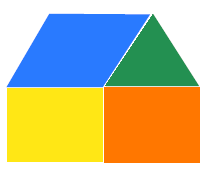
Can you make the large shape below with the four smaller shapes?

Specific Learning Outcomes
- Join shapes together to form other shapes.
- Identify and describe shapes.
- Devise and use problem solving strategies to explore situations mathematically (guess and check).
Description of Mathematics
This problem helps develop students' spatial skills. As the students handle the shapes and join them together they strengthen their understandings of the attributes of shapes. This lesson also gives students the opportunity to make up their own puzzles which is good for building confidence.
Required Resource Materials
- Copymaster of the problem (English)
- Copymaster of the problem (Māori)
- Mosaic shapes, attribute blocks (squares, parallelograms, triangles, hexagons) or a digital representative
Activity
The Problem
Can you make the large shape below with the four smaller shapes?
Teaching Sequence
- Introduce the problem by showing a rhombus, a triangle and a parallelogram. Ask the students what shape they can make by joining the shapes.
Let the students work for a couple of minutes with the shapes and then talk about what they found. - Show a hexagon.
Can you use the 3 shapes to make this shape? - Pose the problem.
- As the students work on the problem ask:
How are you solving the problem?
How did you decide where to put the shapes?
What can you tell me about this shape? - Share solutions. You could model the solution using a digital tool.
Extension
Make your own puzzles for your friends to solve.
Hint: Place a loop of masking tape, with the sticky side out, to the blocks to hold them together when tracing the puzzle outline.
Answer
Attachments
MosaicPuzzles.pdf79.99 KB
TeHangaAhua.pdf141.76 KB
Add to plan
Level One