This problem solving activity has a statistics focus.
Kelly likes looking for insects in the garden.
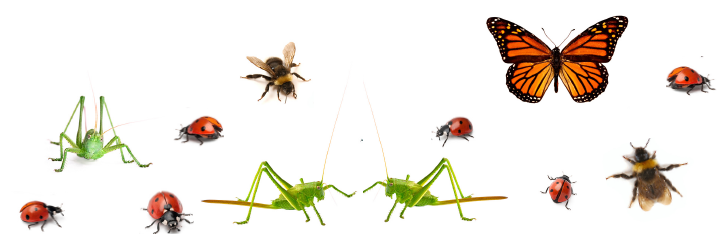
These are all the insects that she saw on one afternoon.
Can you help her display them so that she can tell her friends what she saw in the garden?
- Sort objects into categories and display the results.
- Count the objects in a category.
- Devise and use problem solving strategies to explore situations mathematically (draw, use equipment).
This problem involves sorting objects into categories and then counting them. This experience is the foundation for displaying data in pictograms.
- Pictures of relevant insects (hard copy or digital)
- Copymaster of the problem (English)
- Copymaster of the problem (Māori)
The Problem
Kelly likes looking for insects in the garden. These are all the insects that she saw on one afternoon. Can you help her display them so that she can tell her friends what she saw in the garden?
Teaching Sequence
- Talk about the types of insects that you might see if you looked in a garden (e.g. the school garden, at home, the public gardens). As the students name the insects in this problem display them on the board.
- Read the problem for the students to work on.
- Brainstorm for ideas about how to solve the problem.
- As they work they may choose to cut out the objects to form groups or they may redraw them.
How are you sorting the insects?
How many different insects are there?
What can you tell me about the insects in the garden? - Share displays and count the numbers of different insects. Write a statement that Kelly could use to tell her friends what different insects she saw in the garden.
Extension
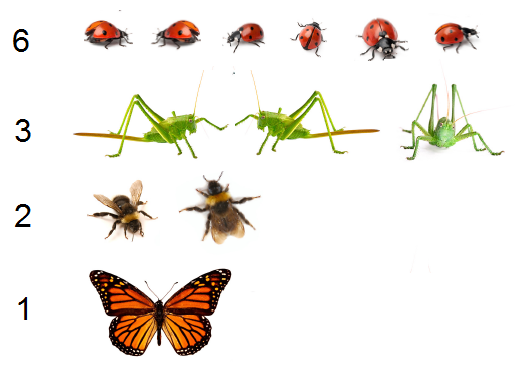
Make a picture graph of the insects.
Solution
There are many ways of displaying the insects to answer the question. To develop the skills required for graphing you may decide to encourage the students to cut out the insects and put them into rows or columns for comparison.